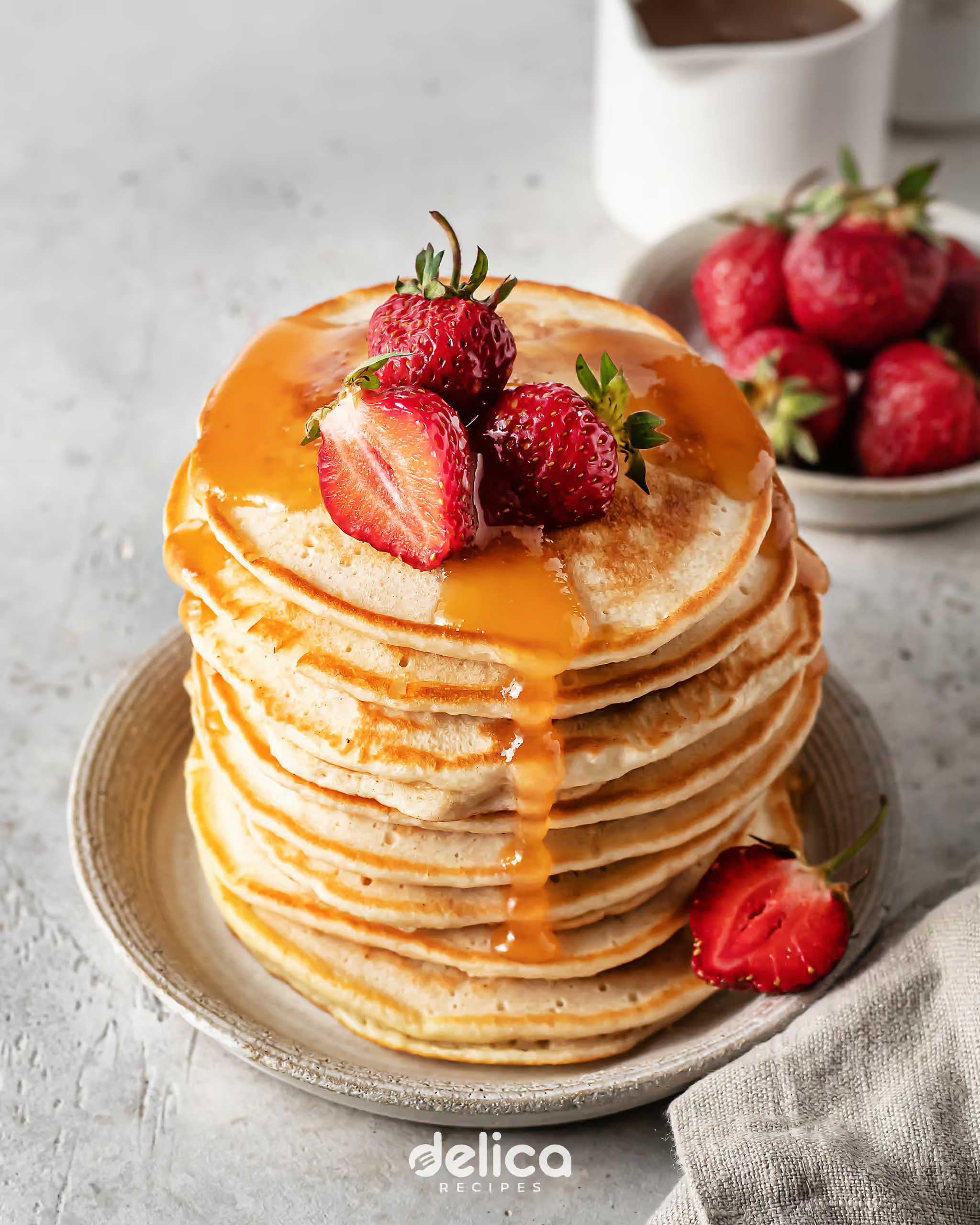
Buttermilk pancakes that are perfectly fluffy, golden-edged, and piled high with whatever toppings you love – that’s the breakfast everyone deserves at least once a week. And with this recipe, it’s completely doable at home in just 20 minutes with basic ingredients you likely already have. The result is a tall, tender stack so good that no store-bought mix will ever come close.
If a proper breakfast is your thing – same here – you’ll love my French toast, bakery-style blueberry muffins, and cinnamon rolls just as much as these super fluffy buttermilk pancakes. For savory mornings, my omelette and crispy hash browns are my go-to. All easy, all on the table in no time.
The Best Buttermilk Pancake Recipe
For a long time, I did what most people do on a Sunday morning – reached for the box. Quick, familiar, and always just fine. Not bad, but never what I actually wanted – always a bit dense, a bit flat, a bit bland.
So I started testing from scratch – ratios, techniques, resting times – until I figured out exactly what was missing. Real buttermilk for tang and tenderness, the right balance of leaveners for genuine height and that golden color, a few small steps that take barely any extra time. This became my best buttermilk pancake recipe, and I genuinely hope it becomes yours too.
The best part is that it’s no more complicated than using a mix – just simple ingredients, a few things worth knowing, and you’re most of the way there already. Let’s start with the ingredients.
Buttermilk Pancakes Ingredients
Every ingredient here pulls its weight to make the best buttermilk pancakes. Here’s what goes into this recipe and what each one actually does:
Flour. All-purpose is my go-to, and I’ve tried a few alternatives. Cake flour makes the pancakes too delicate – they fall apart on the flip. Bread flour goes the other way and makes them chewy. All-purpose sits right in the middle: enough structure to hold everything together, light enough to keep the crumb tender.
Measuring it correctly matters just as much as choosing it. I prefer to weigh my flour on a kitchen scale – it’s the most reliable way and takes all the guesswork out. If you don’t have one, spoon the flour into the measuring cup and level it off. Scooping straight from the bag packs it in and you’ll end up with more flour than you need, which makes the batter too thick and the buttermilk pancakes dense.
Leaveners. I use baking powder and baking soda (bicarb soda) in this fluffy buttermilk pancake recipe, and there’s a good reason for it. Baking powder is the main leavener – it’s what gives the hotcakes their lift and helps them puff up into that tall, fluffy stack. Baking soda works differently: it reacts with the acidity of the buttermilk and helps the pancakes brown on the outside.
The same approach works beautifully in my bakery-style blueberry muffins – it helps create that airy crumb and tall, domed top. Same idea here, just in pancake form.
Buttermilk. This is the ingredient that sets these homemade pancakes apart. Buttermilk adds a gentle tang that you can’t quite replicate with regular milk, and its acidity is what activates the baking soda and helps create that soft, tender crumb.
I always go for real buttermilk when I can – the flavor and texture are just better, and you’ll taste the difference. But if you’re out, it’s not the end of the world, and you can make a quick substitute. Just stir 2 tbsp of white vinegar or lemon juice into 2 cups (480 ml) of regular milk and let it sit on the counter for 5-10 minutes. It’ll thicken slightly and look a little lumpy – that’s exactly what you want.
Eggs. They bind the batter and give the buttermilk pancakes their structure. I always use them at room temperature, because cold eggs can cause the melted butter to firm up when everything gets mixed together, which leaves uneven streaks in the batter. Taking them out 20-30 minutes before you start is enough.
Butter. It adds richness and a flavor that oil just doesn’t match. I melt it first and let it cool slightly before adding it to the wet ingredients – if it goes in too hot, it can start to cook the eggs before the batter even hits the skillet.
Seasoning. Just sugar and salt – nothing fancy. Sugar adds a light sweetness and helps these buttermilk pancakes get that golden color in the skillet. Salt ties everything together, and skipping it means even a well-made batter tastes like something’s missing.
Vanilla Extract
A small addition that does a lot. Vanilla adds warmth and depth to the flavor – honestly, I can always tell when it’s missing, and it’s not something I’d skip.
Once the ingredients are ready, the next part is all about how to put it all together.
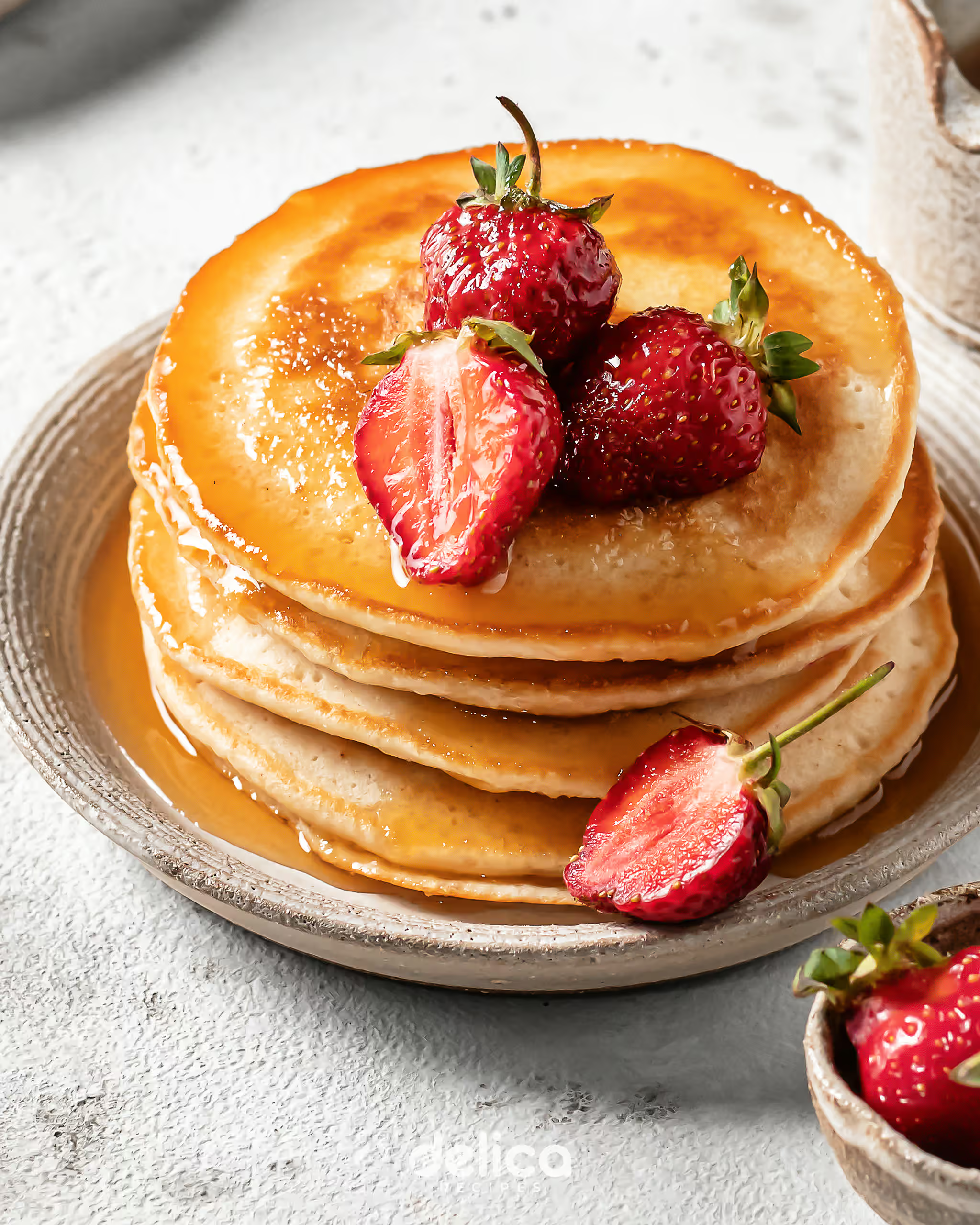
How to Make Buttermilk Pancakes
Making buttermilk pancakes from scratch is easy once you know the little cues to watch for. Here’s everything I’ve found useful along the way:
How to Make the Perfect Buttermilk Pancake Batter
The batter comes together quickly, but there are two things I never skip. First – don’t overmix. Once the wet ingredients hit the dry, fold everything together just until combined. A few lumps are completely fine and actually a good sign. If you keep stirring until the batter looks perfectly smooth, you’ve gone too far, and the result is tough, flat pancakes instead of light and fluffy ones.
Second – let the batter rest. I leave it for about 5 minutes while the skillet heats up. That short rest gives the flour time to fully hydrate and lets the leaveners start doing their job, which means better rise and a more tender crumb by the time the buttermilk pancakes hit the skillet.
What Is the Best Pan for Pancakes
A flat griddle is my first choice because it gives me enough space to cook all the pancakes in one or two batches. That way, everyone gets a warm stack quickly instead of waiting through multiple rounds.
For a smaller batch, I reach for a large nonstick skillet or well-seasoned cast-iron. Both work great – cast iron holds heat beautifully and gives the edges a slightly crispier finish, while nonstick is more forgiving and needs very little greasing. Either way, you’re in good hands – just pick whichever one you trust more.
What Is the Right Temperature to Cook Pancakes
Medium-low is the sweet spot, and I’d rather go too low than too high. High heat is the most common reason pancakes come out with a dark, almost burnt exterior and an undercooked center – the outside sets too fast before the inside has time to cook through. Medium-low gives the pancakes time to cook evenly all the way through and develop that golden color without rushing.
How to Keep Pancakes From Sticking to the Pan
The right pan helps – I already covered that above – but the real key is proper preheating. A skillet that isn’t hot enough before the batter goes in is the main reason pancakes stick.
I always heat the skillet for about 5 minutes, then lightly grease it with butter or cooking spray before each batch. To check if it’s ready, I drop a few water droplets onto the surface – if they dance and evaporate quickly, you’re good to go. It’s the same principle I rely on when making hash browns: a properly preheated, lightly greased skillet means nothing sticks and everything browns exactly the way it should.
When to Flip Pancakes
This is where a lot of people jump too early. The pancake isn’t ready to flip just because the bottom looks done – wait until the edges look set and matte, and small bubbles appear across the surface and start to pop near the border. That’s the signal. Flip it once, cook for another 1-2 minutes, and resist the urge to press it down with the spatula – that squeezes out all the air you worked to build.
How to Keep Pancakes Warm
If you’re cooking on a griddle and making everything in one or maximum two go, this tip isn’t something you’ll need. But if you’re working in several batches, the oven is your best friend. Set it to 200°F (100°C), place the pancakes in a single layer on a baking sheet, and they’ll stay warm and soft while you finish the rest. I skip covering them with foil – it traps steam and makes them go soggy.
From here, the only thing left is choosing what goes on top of those amazing buttermilk pancakes you just made.
The Best Pancakes Toppings
A great stack of fluffy buttermilk pancakes deserves great toppings, doesn’t it? Here’s what I love most:
- Butter. Butter is the first thing I reach for while the pancakes are still hot. It melts into the top pancake, softens the edges, and gives every bite that rich, classic breakfast flavor.
- Maple Syrup. Real maple syrup is the move here – not the pancake syrup from a bottle, which is mostly corn syrup and artificial flavoring. I like to warm it slightly before serving, and it pours beautifully over the pancakes instead of cooling everything down.
- Honey. A light drizzle works beautifully if you’re out of syrup, or just want something a little different.
- Fresh Berries. Fresh berries are my favorite way to add a little brightness. Strawberries, blueberries, raspberries, or a mix of everything all work great with the buttermilk pancakes and maple syrup.
- Whipped Cream. If you want the stack to feel a little more dessert-like, a generous dollop on top does exactly that. Especially good with fresh berries alongside.
- Toasted Nuts. A handful of pecans or walnuts adds a crunch that contrasts really nicely against the soft, fluffy buttermilk pancakes. Toast them in a dry skillet for a minute or two first – the flavor that comes out is something else entirely.
- Peanut Butter. It sounds a little unexpected, but spread a thin layer over a warm stack and let it melt in slightly. It’s rich, satisfying, and somehow works better than it has any right to.
What are your favorite pancake toppings? Drop them in the comments – I’m always curious what people reach for!
Storing and Reheating Tips
If you somehow end up with leftover buttermilk pancakes – which doesn’t happen often in my house – they store really well and reheat beautifully.
Let the pancakes cool completely on a wire rack before storing. If you stack them while they’re still warm, the trapped steam can make them soggy. Once cooled, keep them in an airtight container in the fridge for up to 4 days, or freeze for up to 2 months.
When it comes to reheating, the toaster is my favorite method – it takes about a minute, crisps up the edges slightly, and they come out tasting almost freshly made. The oven works great too: arrange them in a single layer on a baking sheet, cover loosely with foil, and warm at 350°F (175°C) for about 5-8 minutes. I’d skip the microwave if you can – it tends to make them soft and rubbery, which is a shame after all that effort.
Now grab your skillet and give these super fluffy buttermilk pancakes a try – I’d love to hear how it goes in the comments below!
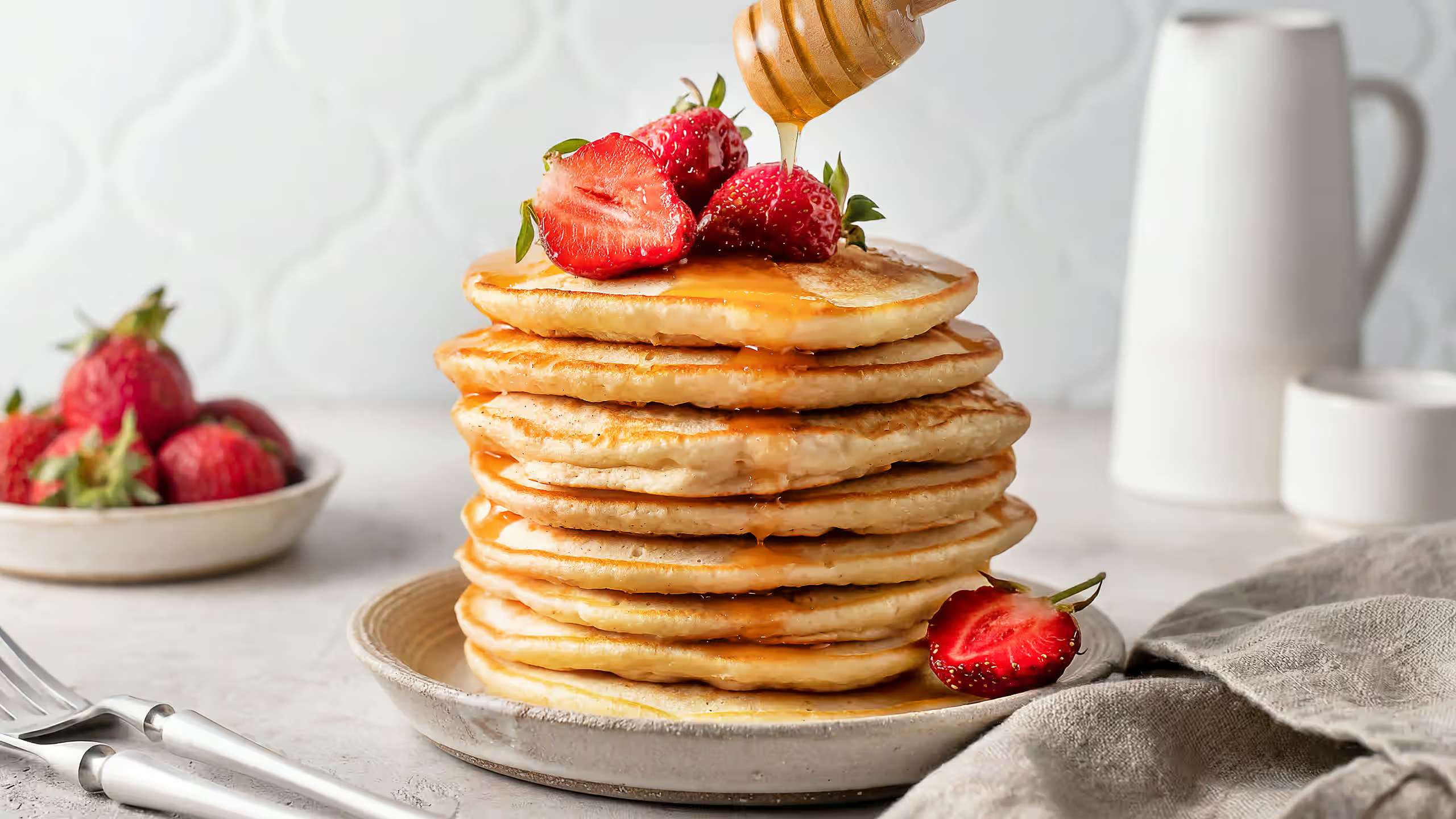

Buttermilk Pancakes
Equipment
- 2 Mixing Bowls(large and medium)
- Whisk
- Griddle, Non-stick Skillet, or Cast-iron Skillet
- Measuring Spoons
- Spatula
Ingredients
- All-purpose Flour2 cups
- Granulated Sugar2 tbsp
- Baking Powder2 tsp
- Baking Soda½ tsp
- Salt½ tsp
- Buttermilk2 cups
- Eggs(large, at room temperature)2 pcs
- Vanilla Extract2 tsp
- Unsalted Butter(melted and slightly cooled, plus more for the skillet)4 tbsp
Instructions
- Melt the butter in the microwave or on the stovetop, then set it aside to cool slightly while you prepare the rest of the ingredients.
- In a large bowl, whisk together the flour, sugar, baking powder, baking soda, and salt until evenly combined.
- In a medium bowl, whisk together the buttermilk, eggs, and vanilla extract until smooth. Slowly whisk in the melted butter until fully incorporated.
- Pour the wet mixture into the dry and fold together with a spatula until just combined. The batter should look rough and a little lumpy – that's exactly what you need. Set it aside to rest while you heat the pan.
- Place your griddle, cast-iron or nonstick skillet over medium-low heat and let it preheat for about 5 minutes. Lightly grease with butter or cooking spray. To test if it's ready, add a few drops of water to the surface – if they sizzle and evaporate quickly, you’re good to go.
- Portion the batter using about ⅓ cup per pancake. Leave them undisturbed until the edges look set and bubbles begin breaking through the surface, about 2-3 minutes. Flip and give the other side 1-2 minutes until cooked through and golden.
- Repeat with the remaining batter. Lightly grease the skillet between each batch, and adjust the heat between medium-low and low if the pancakes start browning too quickly.
- Serve warm with butter, maple syrup, and fresh berries if desired. Enjoy!
Notes
- Weigh your flour if you can. A kitchen scale gives you the most consistent results. If measuring by cup, spoon the flour in and level it off rather than scooping.
- Don’t overmix the batter. A rough batter with a few lumps are fine. Overmixing develops gluten and gives you tough, flat pancakes.
- Don’t skip the rest. It takes just 5, but this resting time lets the leaveners activate and the flour absorb the liquid properly.
- Keep the heat at medium-low. Don’t go too high, the pancakes need time to cook through before the outside gets too dark.
- Don’t press the pancakes down with the spatula. Pressing down on the pancakes while they cook pushes out all the air that makes them fluffy.
- Keep pancakes warm. If cooking in large batches, keep finished pancakes in a single layer in a 200 oven. Don’t cover – steam makes them soggy.
Nutrition Information
Serving Size: 70 g
| PER SERVING | AVG. QTY* | %DV** |
|---|---|---|
| Calories | 149 kcal | 7% |
| Protein | 5 g | 10% |
| Fat | 5.2 g | 8% |
| Saturated | 3 g | 15% |
| Unsaturated | 2 g | 5% |
| Trans | 0.2 g | |
| Carbohydrate | 20 g | 7% |
| Dietary Fiber | 1 g | 4% |
| Sugars | 4 g | 4% |
| Sodium | 285 mg | 12% |
| Cholesterol | 43 mg | 14% |
* Nutritional values are approximate and provided for general guidance only. Actual values may vary depending on ingredients and exact quantities used.
** Percent Daily Values are calculated based on a standard 2,000-calorie daily diet. Individual nutritional needs may differ depending on personal calorie requirements.
Share with Friends
Good food is better when shared. It also helps us create more recipes for you.
Frequently Asked Questions
How to make buttermilk pancakes?
Make buttermilk pancakes by mixing dry and wet ingredients separately, folding together until just combined, resting the batter, then cooking on medium-low heat.
How to make pancakes more fluffy?
To make pancakes extra fluffy, don’t overmix the batter – a few lumps are fine. Let it rest before cooking, and cook on medium-low so they rise before browning.
What does buttermilk do to pancakes?
Buttermilk makes pancakes lighter, fluffier, and more tender. Its acidity reacts with baking soda for better lift, softens the crumb, and adds a subtle tangy flavor.