Potato salad where potatoes are tender but not falling apart, dressing clings instead of sliding off, and every bite has that perfect mix of creamy, tangy, and just enough crunch. The side dish that belongs at every BBQ, picnic, potluck, and family gathering – and always runs out fast. It’s surprisingly easy to make and comes together in 30 minutes. Once it’s made like this, it never gets left behind.
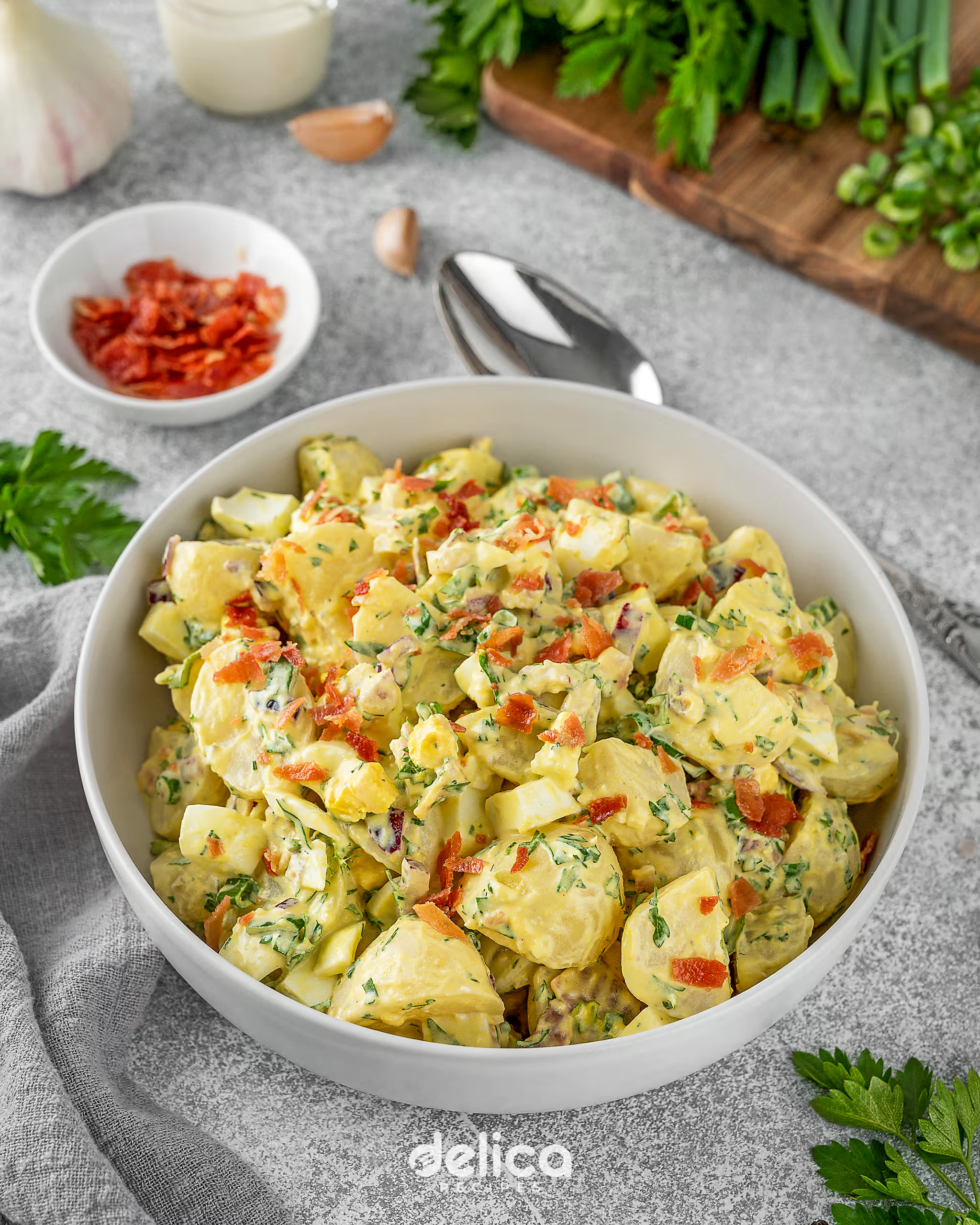
There’s something about potato salad that feels instantly familiar – the kind of dish that’s been on almost every table you’ve ever sat at. But after too many versions that were mushy, too heavy, or just flat in flavor, I wanted to figure out what actually makes it good. Different potato types, different dressing ratios, small details that turned out to matter more than I expected. It took time to get there, but once I did, I couldn’t go back to making it any other way.
I make salads a lot, so I’m honestly a bit picky about which ones stick. This easy potato salad has earned its place right up there with my spinach strawberry salad and beet salad – the ones I reach for when I want something lighter and fresher. And if potatoes are your thing like they are mine, my crispy hash browns and roasted potatoes are two recipes also worth bookmarking.
What Is Potato Salad?
Potato salad is one of those classic comfort dishes that’s been on tables in almost every culture for generations. At the core, it’s cooked potatoes and a dressing, but the way it’s made changes a lot depending on where you are and what you grew up with.
The American version, which is what this recipe is, builds on a creamy mayo-based dressing with mustard, pickles, eggs, and celery for that signature crunch. But travel a bit and the whole thing shifts. German potato salad is often dressed with vinegar and served warm. French potato salad goes lighter – olive oil, Dijon, fresh herbs. Russian Olivier salad goes richer, loaded with ham or sausages. It’s one of those rare dishes where every culture got it right in their own way.
The style may change from one version to another, but the potatoes are always what make or break it.
Best Potatoes for Potato Salad
The type of potato you use changes how the whole salad holds up once it’s boiled, dressed, and chilled, so it’s worth getting right from the start.
For this traditional potato salad recipe, I’m after the pieces that stay tender but hold their shape once everything gets mixed together – not mashed potato vibes, just clean, chunky texture that soaks up the dressing without falling apart or turning grainy once chilled. That’s why I lean toward waxy potatoes, or ones that sit somewhere in the middle.
In the US, Yukon Golds and red potatoes are the easiest options. Yukon Golds give a slightly creamier texture, while red potatoes stay a bit firmer. In Europe, waxy salad varieties like Charlotte or Nicola are the standard pick and easy to find. Here in Australia, I’d look for red-skinned potatoes for homemade potato salad rather than the more common white ones, which tend to be more all-purpose and are usually better for roasting or mashing.
I’ve made this easy salad with starchier potatoes too, and it can work – but they need more attention. Leave them a little too long and half the bowl starts collapsing when you fold everything together. So if that’s what you have on hand, just pull them off the heat a little earlier than you think you need to.
Once you’ve chosen the best potatoes, everything else is pretty straightforward. From there, it’s just about the ingredients that build the dressing, add crunch, and give the salad its balance.
Potato Salad Ingredients
Once you’ve sorted the potatoes, the rest of the ingredient list comes together quickly. Most of it is pantry staples – here’s what each one brings to the bowl.
- Potatoes. The star of the show, and we’ve already covered how to pick the right variety above.
- Celery and red onion. These are what keep the potato salad from feeling too soft, and I always add both. Celery adds crunch and a mild savoriness, while red onion brings a bit of sharpness that cuts through the creamy dressing. Without them, everything starts blending together too much. If raw onion isn’t your thing, green onions are a softer swap.
- Hard boiled eggs. Optional, but I rarely skip them. For me, potato salad with eggs feels a little more classic and a little more substantial. They also soften the overall texture in a nice way, especially against the crunchier ingredients. Leave them out if you prefer – nothing else needs adjusting.
- Bacon. Also optional, also very good. I really like what it does here. A few crispy strips add smokiness and a bit of texture that’s hard to replicate. Skip it to keep things meat-free, or swap with smoked tempeh if you want something plant-based.
- Mayonnaise. The base of the dressing and what gives it that creamy, rich texture. Full-fat works best here. Greek yogurt can replace part of it if you want something lighter, though the flavor will be slightly tangier.
- Apple cider vinegar. Adds a gentle tang and brightens the whole salad. White wine vinegar or plain white vinegar both work as substitutes.
- Mustard. You can use either yellow mustard or Dijon, or even half and half. I personally prefer yellow here because it gives that classic, familiar flavor that feels right in a traditional potato salad. Dijon brings a slightly sharper, more complex note if that’s your thing.
- Dill pickles. They are one of the ingredients I really wouldn’t skip here. They bring tang, salt, and little pops of texture that make the dressing taste much more alive. Pickle relish is an easy swap if that’s what you have on hand.
- Fresh herbs. Parsley, chives, or dill, or a mix of all three. They add freshness and a little color. I’d stick to fresh here – dried herbs just don’t give the same brightness in a cold salad.
Now that everything is prepped and ready, let’s get into how to actually put this all together. And that’s exactly where a few small details shape the final texture, flavor, and overall feel of the salad.
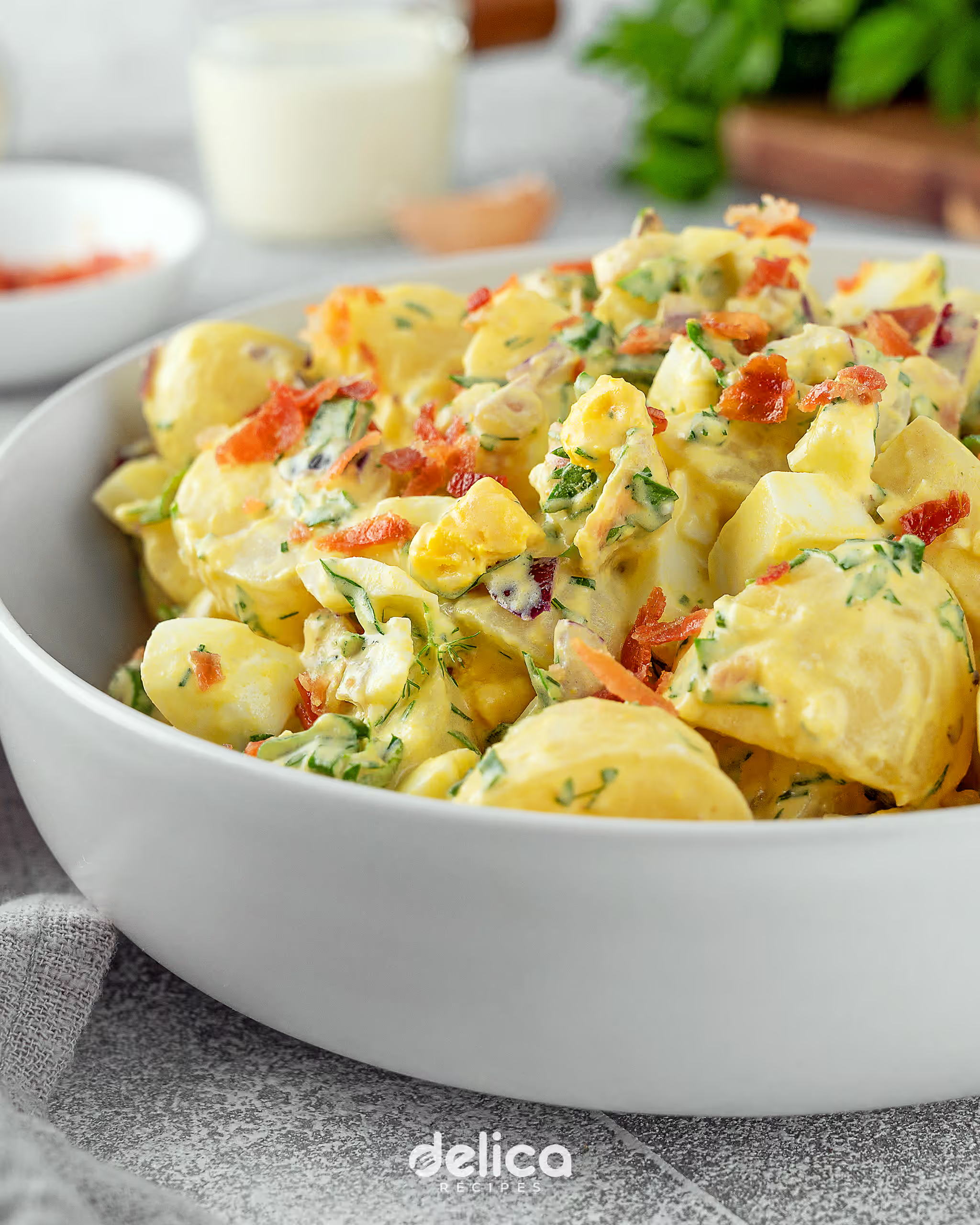
How to Make Potato Salad
Getting the best potato salad is as much about how you make it as what goes into it. Here’s everything worth knowing before you start.
How to Prepare Potatoes for Potato Salad
To peel or not to peel – that’s the first question. Honestly, either is fine. Leaving the skin on adds texture and a slightly rustic feel, especially with Yukon Golds and red potatoes whose skins are thin and tender. For a summer cookout I usually leave the skin on because it looks more interesting in the bowl. For a more formal spread, I’ll peel.
I prefer to cut the potatoes into ¾ inch to 1 inch (2-2.5 cm) chunks. Bite-sized chunks are the goal – you want a good-sized piece you can taste in each forkful, not something so small it disappears into the dressing.
One more thing to keep in mind is cutting the potatoes to roughly the same size. If some chunks are twice the size of others, the smaller ones will be overcooked by the time the larger ones are done.
How to Boil Potatoes for Potato Salad
Boiling sounds like the easy part, and it mostly is – but a couple of small things here can genuinely change how the finished salad tastes and feels.
The first one is starting in cold water, not boiling. I know it seems like a detail, but dropping potatoes into already-boiling water means the outside cooks faster than the inside – you end up with a mushy exterior before the center is even done. Cold water lets everything come up to temperature together, which gives you that even, tender texture throughout.
While you’re filling the pot, salt the water generously – it should taste lightly seasoned, not like the ocean. I used to skip this and just rely on the dressing to do all the seasoning work. It doesn’t. Potatoes cooked in unsalted water taste flat all the way through, and you can’t fix that after.
Once it comes to a boil, reduce to a simmer and cook for 10-12 minutes. The exact time depends on the potato variety and the size of your chunks, so I usually start checking around the 10-minute mark with a fork or knife – you’re looking for tender but not falling apart, where the fork slides in with just a little resistance.
The last step is one I’d really encourage you not to skip: after draining, transfer the potatoes to your bowl while still warm and toss immediately with an apple cider vinegar. The warmth opens up the surface just enough to let it soak in, seasoning the potato from within. No amount of dressing added later can replicate that, and you’ll taste the difference.
How to Make Potato Salad Dressing
This is the easy step, but it still matters because the dressing is exactly where a lot of potato salads fall flat. The good news is that it comes together in under two minutes – just add the mayonnaise, mustard, apple cider vinegar, and finely chopped dill pickles to a bowl and whisk until smooth.
Before it goes anywhere near the potatoes, I always taste it on its own. It should be noticeably tangy and well-seasoned, almost a little too punchy by itself, because the potatoes will absorb a good amount of that flavor once everything comes together. If it tastes flat, a little more vinegar usually fixes it. If it’s too sharp, a small pinch of sugar rounds it right out.
One thing I’ve started doing every now and then: swapping half the mayo for sour cream. It adds a subtle tang and gives the dressing a slightly different feel – a bit less rich, in a good way. Not a must, but worth trying at least once.
How to Assemble Potato Salad
This is the part where it all comes together – and while it’s straightforward, how you mix it actually matters more than you’d think. Potatoes are fragile once cooked, so if you stir too aggressively you’ll end up with something closer to chunky mashed potatoes, which is definitely not what we’re going for. A rubber spatula works better than a spoon – slow, deliberate folds until everything is just evenly coated.
Once everything is combined, I’d strongly recommend giving it at least an hour in the fridge before serving. The flavors need a little time to settle and come together – straight out of the bowl it tastes fine, but after an hour it tastes like a completely different salad.
With that, the only thing left to figure out is what to serve alongside it.
What to Serve with Potato Salad
Potato salad is one of those dishes that works with almost anything, which is probably why it shows up at almost every cookout, potluck, and family dinner without anyone questioning it.
For me, it’s always been a backyard BBQ staple – the kind of dish that shows up next to whatever’s coming off the grill, whether that’s burgers, grilled chicken, or ribs. That said, not every gathering involves a grill, and baked chicken drumsticks have become my go-to alternative when I want something just as satisfying without the extra setup.
If you’re putting together more of a spread, deviled eggs are a natural fit – they’re already at home and take almost no effort if you have leftover hard boiled eggs from the salad itself. Boiled corn on the cob is another one I love to put out alongside it, especially in summer. And if I want to add something a little more elegant without much extra work, green beans Almondine is always my first reach.
Make-Ahead and Storing Tips
Making this simple potato salad ahead is one of the things I genuinely appreciate about this recipe – you’re not scrambling in the kitchen while your guests are already at the table.
I usually make it the night before or at least a few hours ahead. After assembling, cover the bowl tightly with plastic wrap and refrigerate. By the time it hits the table, the flavors have had time to really settle into each other, and the whole salad just tastes more cohesive than if you served it straight away.
Leftovers keep well in the fridge for up to 4 days in an airtight container. By day two it’s honestly sometimes even better than day one – just give it a gentle stir before serving since the dressing tends to settle a bit as it sits.
If you’re taking it to a cookout or picnic, keep it in a cooler until you’re ready to eat and try not to leave it sitting out for more than two hours. Mayo-based salads don’t do well in the heat, and it’s an easy thing to manage with a little planning.
Whether you’re planning to make this soon or just browsing for ideas, this one’s worth coming back to – I promise it won’t disappoint.
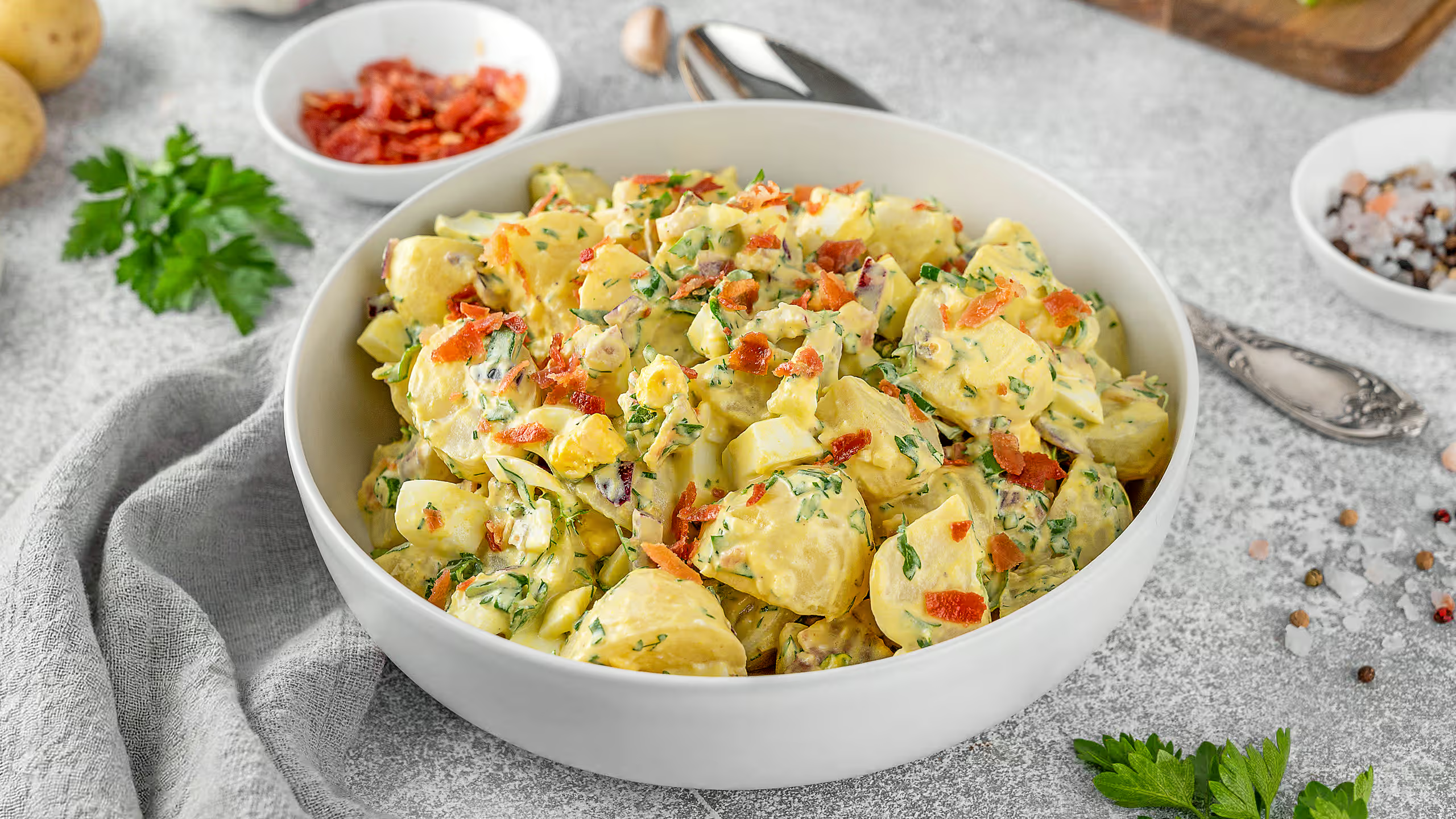

Potato Salad
Equipment
- Large Pot
- Colander
- 2 Mixing Bowls(large and medium)
- Knife
- Cutting Board
- Spatula
- Measuring Spoons
Ingredients
Potato Salad
- Potatoes2 lb
- Apple Cider Vinegar1 tbsp
- Celery(finely diced)2 ribs
- Red Onion(finely diced)½ pc
- Hard Boiled Eggs(peeled and chopped, optional)4 pcs
- Bacon(optional)4 slices
- Fresh Herbs(such as parsley, chives, or dill, chopped)¼ cup
- Salt(for boiling)
Potato Salad Dressing
- Mayonnaise1 cup
- Yellow Mustard2 tbsp
- Apple Cider Vinegar2 tsp
- Dill Pickles(finely chopped)2 pcs
- Salt1 tsp
- Black Pepper½ tsp
Instructions
- Peel the potatoes if desired, then cut into ¾ inch – 1 inch chunks. Place them in a large pot and cover with cold water by about 1 inch. Salt the water so it tastes lightly seasoned (about 1 tbsp). Bring to a boil over medium-high heat, then reduce to a simmer and cook for 10-12 minutes, until fork-tender but not falling apart.
- While the potatoes are boiling, cook bacon in a skillet over medium heat until crisp, about 6-8 minutes. Transfer to a paper towel-lined plate to cool, then chop into small pieces.
- Drain the potatoes in a colander and transfer to a large bowl. Drizzle with the apple cider vinegar and toss gently to coat.
- Chop the hard boiled eggs into bite-sized pieces. Finely dice the celery and red onion. Chop the fresh herbs.
- Combine all the dressing ingredients in a medium bowl and whisk until smooth.
- Pour the dressing over the warm potatoes. Add the chopped eggs, celery, red onion, fresh herbs, and most of the bacon if using, reserving some for garnish. Fold gently with a rubber spatula until everything is evenly coated.
- The salad can be served right away, but it tastes even better after at least 1 hour in the fridge, which gives the flavors time to settle and come together. Top with the reserved bacon just before serving if using.
Notes
- For the best texture, start the potatoes in cold water rather than boiling – it helps them cook evenly all the way through.
- The apple cider vinegar is used twice in this recipe – once for the potatoes and once for the dressing. Check the ingredient list before you start so you have the right amount ready for each.
- Fold the dressing in while the potatoes are still warm. They absorb flavor much better at that stage than once they’ve cooled down.
- Taste the dressing before it goes on the potatoes – it should taste a little punchy on its own, since the potatoes will mellow it out.
Nutrition Information
Serving Size: 275 g
| PER SERVING | AVG. QTY* | %DV** |
|---|---|---|
| Calories | 449 kcal | 22% |
| Protein | 9.8 g | 20% |
| Fat | 32.7 g | 50% |
| Saturated | 5.9 g | 30% |
| Unsaturated | 26.8 g | 67% |
| Carbohydrate | 29 g | 10% |
| Dietary Fiber | 4.1 g | 16% |
| Sugars | 2.4 g | 3% |
| Sodium | 753 mg | 33% |
| Cholesterol | 161 mg | 54% |
* Nutritional values are approximate and provided for general guidance only. Actual values may vary depending on ingredients and exact quantities used.
** Percent Daily Values are calculated based on a standard 2,000-calorie daily diet. Individual nutritional needs may differ depending on personal calorie requirements.
Share with Friends
Good food is better when shared. It also helps us create more recipes for you.
Frequently Asked Questions
How to make potato salad?
To make potato salad, boil cubed potatoes until fork-tender, toss warm with vinegar, fold in a creamy mustard-mayo dressing with celery, onion, pickles, and herbs.
Can you freeze potato salad?
Technically you can freeze potato salad, but I don’t recommend it. Mayonnaise-based dressings separate when thawed and the potatoes turn watery and grainy.
How long does potato salad last in the fridge?
Potato salad keeps well for up to 4 days when stored in an airtight container in the fridge.
What potatoes are best for potato salad?
The best potatoes for potato salad are waxy varieties, since they stay tender without falling apart. In the US, go for Yukon Golds, in Europe – Charlotte or Nicola, in Australia – red potatoes.
What goes into potato salad?
Classic potato salad starts with boiled potatoes, mayonnaise, mustard, vinegar, celery, onion, pickles, and herbs. Eggs and bacon are popular additions.
What is potato salad?
Potato salad is a popular cold side dish of boiled potatoes tossed with a creamy mayo-based dressing, typically served at BBQs, potlucks, and family gatherings.
What goes well with potato salad?
Potato salad pairs well with grilled meats, fried or baked chicken, hot dogs, deviled eggs, corn on the cob, and coleslaw, which is exactly why it works so well for BBQs, potlucks, and family dinners.