This chicken orzo is the kind of dinner that’s easy to make, feels comforting, and looks impressive – golden seared chicken, perfectly tender orzo, and vegetables all cooked together in one pot. As it cooks, the orzo pasta soaks up all those savory chicken juices, which is exactly why the dish tastes so irresistibly delicious like it’s been cooking for hours. And when it’s all done, there’s not a sink full of dishes waiting for you after
When I’m not sure what to make with chicken for dinner, chicken orzo is often my answer – even more often than teriyaki chicken, baked chicken drumsticks or orange chicken. What I love most is that there’s no main and a separate side to think about – it’s one complete dish, and dinner’s sorted.
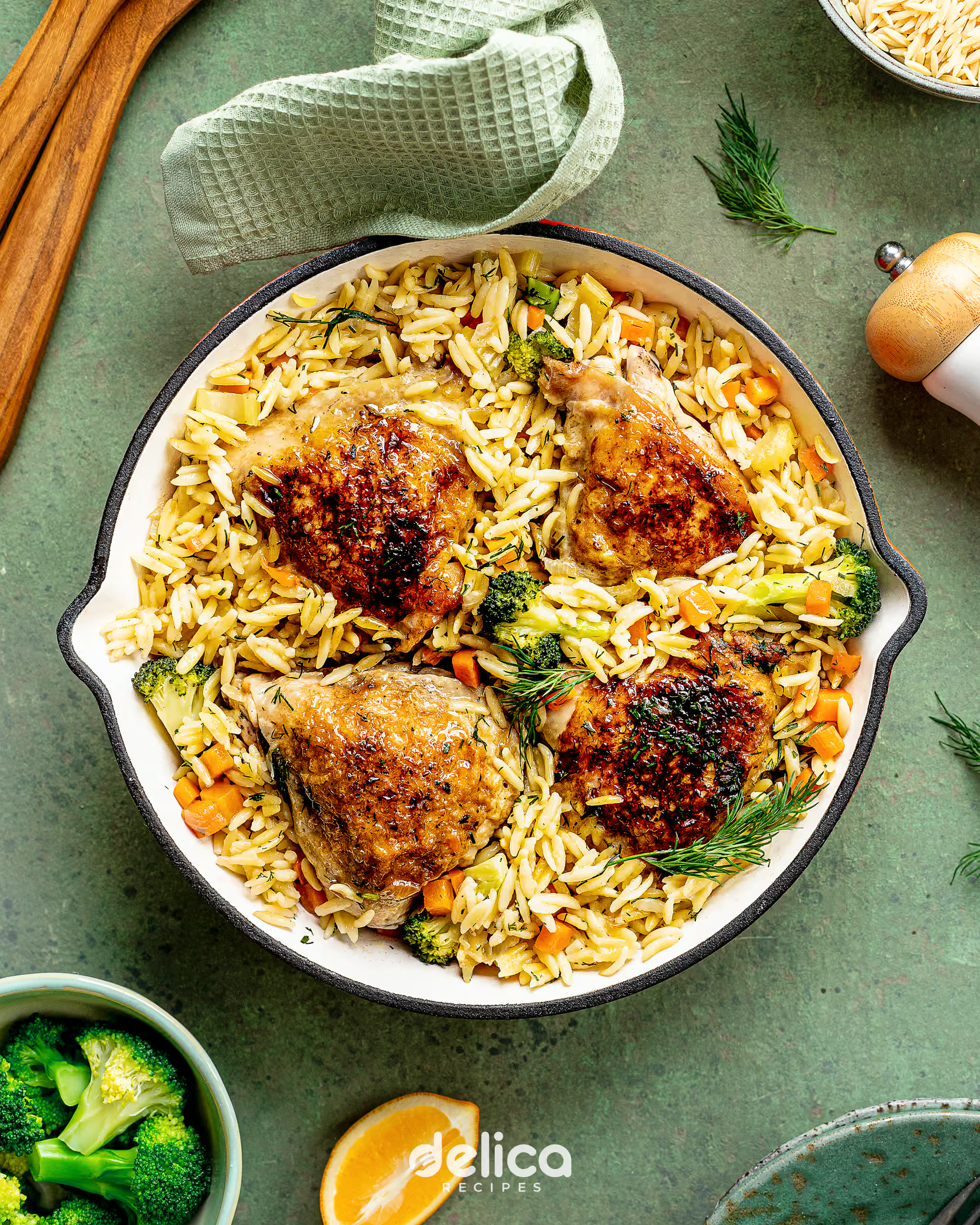
What Is Orzo Rice?
Orzo is one of those ingredients that confuses people the first time they see it. And honestly, I’m not an exception – the first time I wanted to try it, I instinctively went to the rice aisle at the supermarket. No luck there, of course. Orzo looks like rice, but it’s actually pasta.
The tiny grains are made from semolina flour, just like spaghetti or penne. In Italian, orzo literally means “barley” – a nod to its shape rather than its ingredients. Depending on where you are in the world, you might also see it labeled risoni (common in Australia and parts of Europe), or even just called “rice pasta” on some packaging.
If you’ve never cooked with orzo before, think of it as the best of both worlds: the comfort of a rice dish with the flavor and texture of pasta. And once you try it in a one-pot meal like this chicken orzo, it’s the kind of pantry ingredient you’ll probably want to keep around.
One-Pot Chicken Orzo Ingredients
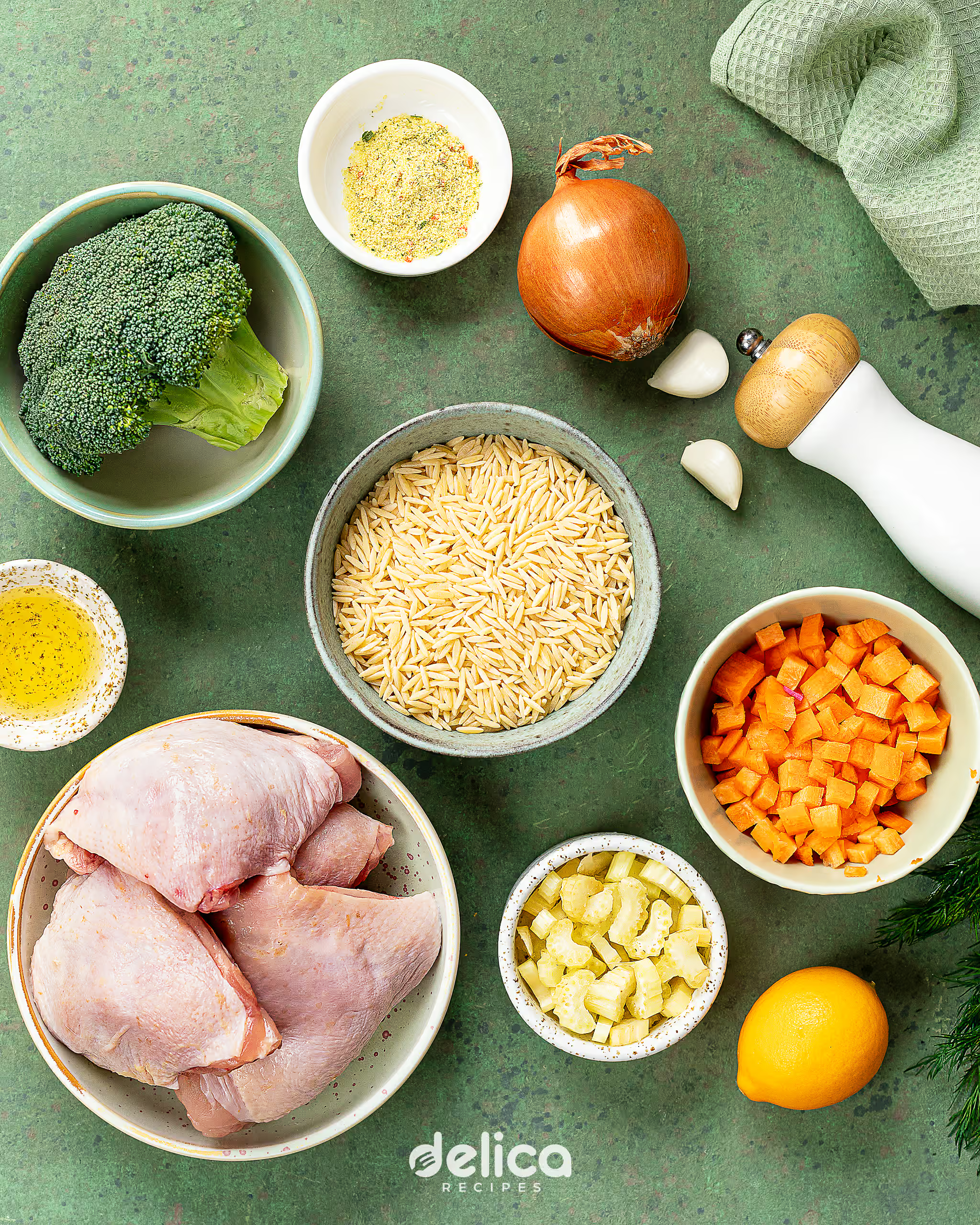
This chicken orzo pasta recipe is very customizable, and I’ll share my favorite variations a little later. But this version is built around the ingredients I enjoy most. Here’s what you’ll need:
Chicken. My go-to for this easy chicken orzo recipe is bone-in, skin-on thighs – they stay juicy, and as the skin renders it flavors everything in the skillet. Boneless, skinless thighs or chicken breasts are fine too, just expect about 10-15 minutes less cooking time. And if you have leftover rotisserie chicken or aren’t sure what to do with leftover chicken thighs, those work here as well. In that case, skip the searing and stir the poultry in toward the end.
Orzo (also known as risoni and kritharaki). This small, rice-shaped pasta is what gives the dish its cozy texture. It cooks quickly and turns tender as it absorbs the flavors from the skillet.
Vegetable Base. Onion, carrots, and celery form the classic trio Italians call soffritto. Together they build the savory foundation of chicken orzo, making the whole dish taste like it simmered for hours. And garlic, obviously. I can’t imagine leaving it out – it goes in last so it doesn’t burn.
Broccoli (optional). I like adding broccoli because it brings a bit of freshness and color at the end. You can easily swap it for zucchini, spinach, green beans, or whatever vegetables need using up or simply skip them if you’re not feeling veggies today.
Chicken Broth (or Chicken Stock). I prefer using low-sodium broth in this chicken orzo recipe. As everything simmers, the liquid reduces and the flavors concentrate, so regular broth can make the dish saltier than you might expect. If you only have regular, no problem – just be conservative with the salt from the start.
Olive Oil. Just enough to get the sear going. I always try to use as little fat as possible, and once the chicken hits the skillet it renders its own fat anyway. There’s also a no-oil method – starting the chicken skin-side down in a cold, dry cast iron – that works perfectly well, but it’s unforgiving. Too much heat or flipping too soon and the skin can stick and tear. A little oil keeps things simple and still gives you that deep golden crust.
Lemon Juice & Fresh Dill. Both are optional, but I almost always use them. A squeeze of lemon at the end brightens the chicken orzo, and dill adds a fresh, herby note that pairs beautifully with the chicken. Parsley works just as well if that’s what you have.
Now that you know what goes into this chicken orzo recipe, let’s talk about how to get the best out of it.
How to Make the Best Chicken Orzo
The full step-by-step chicken orzo recipe is below. Before we get to it, here are a few tips I’ve found that help the chicken stay juicy and the orzo turn out perfectly tender and flavorful:
How to Get Crispy Skin on Chicken Thighs
Pat the chicken completely dry with paper towels before it goes anywhere near the skillet. Any moisture left on the skin will steam it instead of crisping – and that golden crust is the whole point. I do this every single time, no exceptions.
How Long to Sear Chicken Thighs
Once the chicken goes skin-side down, leave it alone for 6-8 minutes without touching it. Resist the urge to check or shuffle it. The skin will stick at first and release naturally when it’s ready – if you try to move it too early, you can tear it. I always look for a deep golden color before flipping.
How to Toast Orzo
One small thing I like to do here is toast the orzo for a couple of minutes before adding the broth. After the vegetables have softened, I stir the orzo right into the skillet and let it cook for 2-3 minutes, stirring occasionally so it doesn’t catch.
It picks up all the flavorful fat left in the skillet and starts to smell slightly nutty. For me, toasted orzo tastes noticeably richer than plain boiled orzo, which is why I almost never skip this step.
How to Cook Orzo in Chicken Broth
Whether you’re using bouillon cubes, broth powder or liquid broth from a carton, the rule I always follow is the same – add it hot. For cubes or powder, I dissolve it in hot water first, about 1 tsp per 1 cup (250 ml), though it’s worth checking your brand since they can vary a little. For liquid broth or stock, a couple of minutes in the microwave usually does the trick.
Cold broth straight into a hot skillet is something I tried – the orzo cooked unevenly and the timing went completely out the window. Not worth it.
How to Keep Orzo from Getting Gummy
Once the broth is in, I pretty much leave it alone. Cover the pan and let it do its thing – I only give it a gentle stir near the very end if it looks like it’s catching on the bottom. Stirring too often releases extra starch from the pasta, which can make the orzo sticky and gluey. Since we’re aiming for tender, separate grains in this chicken orzo recipe, minimal stirring is the way to go.
How Long to Cook Chicken on Stove Top
It really depends on the cut. For bone-in, skin-on thighs like I use here – 6-8 minutes skin-side down, then 4-5 minutes on the other side, and they finish cooking through during the simmer.
If you go with boneless thighs, how long to sear chicken thighs comes down to about 3-4 minutes per side since there’s no bone slowing the heat down.
And if you’re wondering how long to pan sear chicken breast – it needs roughly 4-6 minutes per side over medium-high heat. But chicken breasts are less forgiving than thighs and dry out fast, so a thermometer really is your best friend there. 165°F (74°C) and off the heat immediately.
Thighs are a little different though. They’re technically safe at 165°F (74°C), but I always take mine to around 175°F (80°C). At that point the collagen has started converting into gelatin, which makes the meat noticeably more tender and juicy rather than just cooked through.
These tips work whether you’re making the main chicken thighs orzo recipe or trying another variation – and there are quite a few worth trying.
Top Chicken Orzo Pasta Variations
These are my personal favorite chicken orzo variations – the ones I’ve actually made enough times to recommend. Some are a small twist on the main, others feel like a completely different dish:
Lemon Chicken Orzo
While the main chicken orzo recipe uses just a touch of lemon as a finishing note, this version is properly lemon-forward. I bump the juice up to 3 tbsp and add 1 tsp of zest along with it – the zest deepens the citrus flavor without making it sharper or more acidic. I usually go with spinach or zucchini instead of broccoli in this version – it keeps things lighter and nothing competes with the lemon.
Creamy Chicken Orzo
When I want something more indulgent, I stir in a splash of heavy cream in the last few minutes, right before the orzo finishes absorbing the liquid. About ¼ cup is enough – it gives the dish a silky, velvety texture without making it heavy. For an even richer result, a couple of tablespoons of cream cheese works beautifully too.
Greek Chicken Orzo
This is the version that shifts the whole dish toward Mediterranean territory and feels the most like a whole different recipe. I swap the broccoli for cherry tomatoes and Kalamata olives, add dried oregano with the garlic, and finish with a generous crumble of feta right before serving. The feta softens slightly from the heat and makes everything taste briny and bright. A squeeze of lemon at the end pulls it all together.
Spinach Chicken Orzo
The simplest swap – just replace the broccoli with a couple of large handfuls of fresh baby spinach, stirred in right at the very end. It wilts in about a minute. I sometimes use both – broccoli during the simmer, spinach right at the finish – and it works really well together.
Parmesan Chicken Orzo
Stir in about ½ cup of freshly grated Parmesan in the last couple of minutes of cooking. It melts right into the orzo and creates a creamy, savory coating without needing any cream at all. I always grate it fresh, since pre-shredded Parmesan usually contains anti-caking agents or potato starch to prevent clumping, which keeps it from melting as smoothly.
That’s my top list – but I’m curious about yours. Which version are you going with, or did you make it your own way entirely? Let me know in the comments below!
Storing & Reheating Leftovers
This orzo chicken dish actually reheats very well. Store it in an airtight container in the fridge for up to 3-4 days.
When reheating, the orzo will usually thicken as it sits because it continues to absorb liquid. I like to add a small splash of water or chicken broth or stock before warming it up. A couple of stirs on the stovetop or about a minute in the microwave and it’s back to life.
I don’t know about you, but writing this made me want to make it again. Let’s get dinner started!
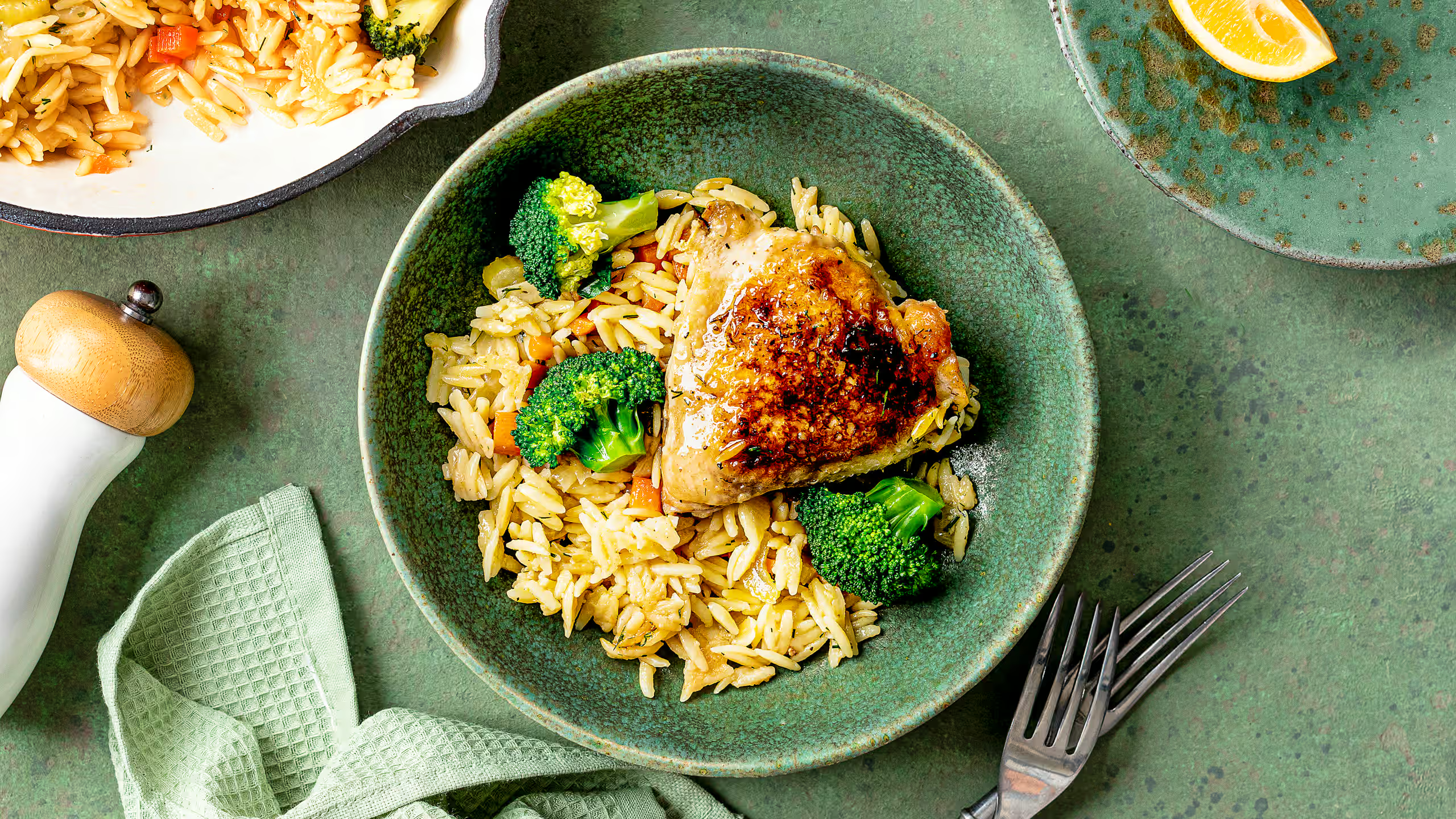

Chicken Orzo
Equipment
- Large Deep Skillet or Cast Iron with a Lid
- Knife
- Cutting Board
- Paper Towels
- Spoon or Spatula
- Thermometer (optional)
Ingredients
- Bone-In Skin-On Chicken Thighs(about 2 lbs)4 pcs
- Uncooked Orzo Pasta1 cup
- Low-Sodium Chicken Broth(hot)3 cups
- Onion(finely chopped)1 pc
- Carrots(diced)2 pcs
- Celery Ribs(diced)2 pcs
- Broccoli Florets(cut into bite-size pieces)1 cup
- Garlic(minced)2 cloves
- Olive Oil1 tbsp
- Salt1 tsp
- Black Pepper½ tsp
- Lemon Juice(optional)2 tbsp
- Fresh Dill(finely chopped for garnish, optional)1 tbsp
Instructions
- Pat the chicken dry with paper towels, then season both sides with salt and black pepper.
- Heat olive oil in a large deep skillet over medium heat. Place the chicken skin-side down and sear for 6-8 minutes without moving, until the skin is deeply golden and releases easily from the skillet. Flip and cook 4-5 minutes more, then transfer to a plate and set aside.
- In the same skillet, add the chopped onion, carrots, and celery. Cook for 3-4 minutes, stirring occasionally, until softened. Add the garlic and cook for 30 seconds until fragrant.
- Add the orzo to the skillet and stir to coat it in the fat. Cook for 2-3 minutes, stirring often, until the orzo smells lightly nutty and the edges begin to turn translucent.
- Pour in the hot chicken broth and stir to combine. Return the chicken thighs to the skillet skin-side up, nestling them into the orzo. Bring to a gentle boil, then reduce heat to medium-low, cover, and simmer for 10-13 minutes.
- Tuck the broccoli florets around the chicken. Cover and continue simmering for 5-7 minutes more, until the orzo is tender, the liquid is fully absorbed, and the chicken thighs reads 175°F at the thickest part. Stir once or twice near the end only if the orzo looks like it's catching.
- Remove from heat, stir in the lemon juice and scatter the fresh dill over the top, if using.
Notes
Going with boneless thighs or chicken breasts? Reduce the searing time and start checking the internal temperature a bit earlier.Don’t rush the sear. The chicken skin releases naturally from the skillet when it’s ready. If it’s sticking, it usually needs more time.Use hot broth or stock. Always add it hot so the cooking temperature doesn’t drop too much. If you’re using bouillon cubes or broth powder, dissolve them in hot water first – about 1 tsp per 1 cup (250 ml). Liquid broth or stock just needs a quick microwaving.Add delicate vegetables later. Broccoli and similar vegetables are best added near the end so they stay bright and don’t overcook.Want it creamier? Stir in about ¼ cup heavy cream in the last 2-3 minutes of cooking.Check the chicken doneness. For the juiciest chicken thighs, cook them to about 175°F (80°C) in the thickest part rather than stopping at the minimum 165°F (74°C). If using chicken breast, aim for 165°F (74°C) so it stays tender and doesn’t dry out.If the orzo thickens too much. Orzo keeps absorbing liquid as it cooks and even as it rests. If the skillet starts looking dry before the pasta is tender, add a small splash of hot broth or water.Nutrition Information
Serving Size: 555 g
| PER SERVING | AVG. QTY* | %DV** |
|---|---|---|
| Calories | 617 kcal | 31% |
| Protein | 42.7 g | 85% |
| Fat | 24.5 g | 38% |
| Saturated | 6 g | 30% |
| Unsaturated | 18.4 g | 46% |
| Trans | 0.1 g | |
| Carbohydrate | 57 g | 19% |
| Dietary Fiber | 4.6 g | 18% |
| Sugars | 5.6 g | 6% |
| Sodium | 1021 mg | 44% |
| Cholesterol | 163 mg | 54% |
* Nutritional values are approximate and provided for general guidance only. Actual values may vary depending on ingredients and exact quantities used.
** Percent Daily Values are calculated based on a standard 2,000-calorie daily diet. Individual nutritional needs may differ depending on personal calorie requirements.
Share with Friends
Good food is better when shared. It also helps us create more recipes for you.
Frequently Asked Questions
How to make chicken orzo?
To make chicken orzo, brown the chicken, sauté vegetables, and toast the orzo in the same skillet. Add hot stock, return the chicken, then cover and simmer until the orzo is tender.
How to cook orzo pasta?
Orzo pasta can be cooked a few different ways. You can boil it in salted water like regular pasta, or simmer it in broth where it absorbs the liquid and turns creamier.
How to cook orzo in chicken broth?
To cook orzo in chicken broth, toast the dry orzo in oil or butter for extra flavor, then add hot broth and let it simmer until tender and the liquid is absorbed.
What is orzo rice?
Orzo is pasta, not rice – though it looks almost identical. It’s made from semolina flour and shaped like large grains of rice, which is where the confusion comes from.
What to make with orzo pasta?
Orzo pasta works well in many dishes. You can use it in soups, fresh salads, one-pot meals like chicken orzo, or cook it simply with herbs and vegetables.